
 Home
Home


How do I identify the right skills for my desired career path?
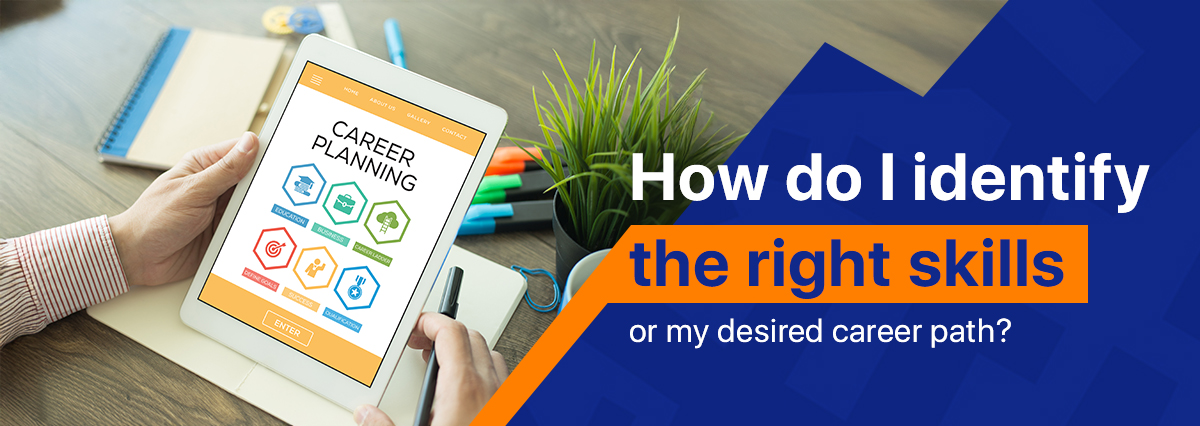
Choosing a career is not something students should start thinking about only after school. By then, subject choices, habits, exposure and confidence may already be shaped. The better approach is to start early, while still in school, with curiosity rather than pressure.
This does not mean every student must decide their final career in Class 8, 9 or 10. Interests can change, and that is normal. However, students can begin understanding what different careers require, what skills they already have and what they need to build gradually. When students prepare early, they make better subject choices, explore opportunities with more confidence and feel less confused when important decisions come up. A structured CBSE online course can also help students build subject clarity while giving them the flexibility to explore career-related skills at their own pace.
As one of the trusted online education platforms, we explain how students can identify the right skills for their desired career path in a practical and balanced way.
What Do "Right Skills" Mean?
The right skills are the abilities, habits and knowledge areas that help a student move closer to a career goal. These skills are not only about academic marks or technical knowledge. They also include communication, problem-solving, digital awareness, discipline, teamwork and the ability to keep learning.
For example, a student interested in medicine may need science knowledge, empathy, patience and strong observation skills. A student interested in digital marketing may need creativity, communication, data understanding and knowledge of online platforms. A student interested in engineering may need mathematics, logical thinking, problem-solving and curiosity about how things work.
So, the "right skills" depend on three things: the career a student is exploring, the subjects connected to that career and the personal qualities required to succeed in that field.
Start with Career Awareness, Not Career Pressure
Students often feel stressed when they are asked, "What do you want to become?" A better question is, "What kind of work interests you?" This helps students explore without feeling forced to choose one fixed path too early.
They can begin by listing areas they enjoy, such as science, technology, business, design, writing, teaching, healthcare, sports, law or media. Then, they can explore the careers connected to these areas. This early awareness helps students understand the link between school subjects and future opportunities.
For instance, a student who enjoys biology may explore medicine, pharmacy, biotechnology, psychology, nutrition or environmental science. A student who enjoys writing may explore journalism, content creation, law, advertising, public relations or teaching.
The goal is not to finalise a career immediately. The goal is to understand possibilities.
Use a Simple Skill-Mapping Framework
One useful way to identify the right skills is to create a simple skill map. Students can divide skills into four categories:
| Skill Category | What It Means | Examples |
|---|---|---|
| Academic skills | Subject knowledge needed for future study | Maths, science, languages, commerce, social science |
| Technical skills | Practical or digital abilities required in a field | Coding, design tools, data analysis, research, lab skills |
| Soft skills | Personal and social skills used in every career | Communication, teamwork, leadership, confidence |
| Future-ready skills | Skills that help students adapt to change | Critical thinking, digital literacy, creativity, adaptability |
This framework helps students see that career preparation is not only about one subject or one exam. It is about developing a balanced skill set over time.
Explore Skills Through Activities
School life gives students many opportunities to test and build skills. Classroom learning is important, but students should also participate in activities that help them understand themselves better.
Debates, quizzes, science projects, coding clubs, art competitions, internships, volunteering, group projects, sports and student leadership activities can all reveal useful strengths. These experiences help students understand whether they enjoy teamwork, research, public speaking, planning, creativity or problem-solving.
For example, organising a school event can build leadership and time management. Participating in a science exhibition can build research and presentation skills. Writing for a school magazine can improve communication and creativity.
The more students explore, the easier it becomes to connect interests with career-related skills.
Take Guidance from Teachers, Parents and Mentors
Students do not have to figure everything out alone. Teachers can help students understand subject strengths, learning habits and academic options. Parents can support students by listening, encouraging exploration and avoiding unnecessary comparison. Mentors, counsellors and professionals can give real-world insights into different careers.
Schools can also play an important role by offering career guidance sessions, aptitude-based discussions, exposure to different professions and skill-building programmes. Online education platforms can support this process by helping students access structured learning, career resources and subject guidance. For CBSE students, a well-designed CBSE online course can make this support more accessible by combining syllabus-based learning with regular practice, doubt-solving and exam readiness.
The right support system helps students make informed choices instead of rushed decisions.
Build Transferable Skills Early
Some skills are useful in almost every career. These are called transferable skills because they can be applied across different fields.
Important transferable skills include communication, problem-solving, teamwork, time management, adaptability, creativity, digital literacy and emotional intelligence. Whether a student becomes a doctor, engineer, teacher, entrepreneur, designer or marketer, these skills will always matter.
Students can build these skills through regular habits. Reading improves language and thinking. Group activities improve teamwork. Presentations improve confidence. Planning study schedules improves time management. Learning digital tools improves career readiness.
Small efforts during school can create a strong foundation for the future.
Be Proactive Without Feeling Pressured
Career planning should not become a source of fear. Students should take small, steady steps instead of trying to solve everything at once. They can explore one career area at a time, speak to teachers, try short courses, read about different professions and observe what they enjoy.
The earlier students start, the less pressure they feel later. Early preparation gives them time to make mistakes, discover interests and build confidence.
Identifying the right skills is not a one-time decision. It is a continuous process of learning, exploring and improving. When students understand their interests, map the skills required and seek the right guidance, they become better prepared for future opportunities.


 Previous Post

Leave a Comment